Overview – What It Is
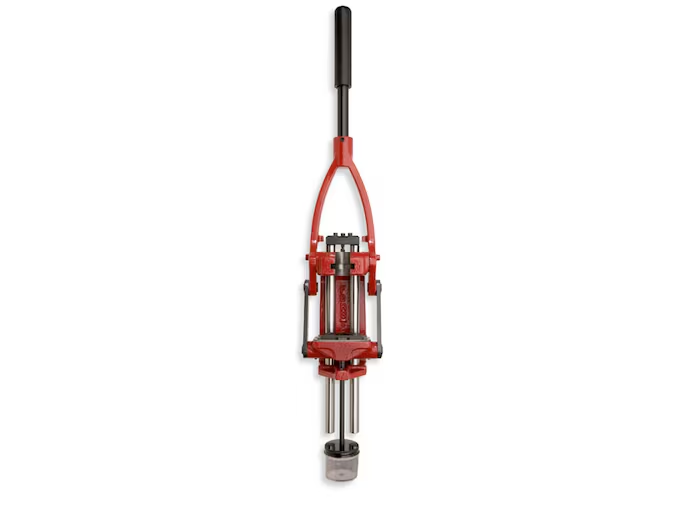
The Forster Co-Ax is a unique single-stage reloading press with a coaxial design that ensures perfect alignment between the die and case for precision loading. It features snap-in jaws for quick shell holder changes, a top-mounted priming system for straight seating, and dual guide rods for smooth operation. If you prioritize accuracy for rifle cartridges or need a press that minimizes runout without complex adjustments, this tool stands out for tasks like resizing, decapping, and bullet seating in everything from pistol to large magnums.
What’s in the Box
Typical contents (may vary by batch/region):
- Forster Co-Ax press with curved links and S jaws (standard size).
- Top priming device with large and small primer arms.
- Spent primer catcher cup.
- Cross-bolt die locking ring.
- Printed instructions and parts list.
Usually not included: bench mounting hardware, dies, shell holders (beyond jaws), case lube.
Materials & Build
- Frame – durable cast alloy with red powder-coat finish for corrosion resistance.
- Guide rods – dual floating steel rods for precise alignment and smooth ram travel.
- Shell holder jaws – spring-loaded steel jaws that snap in/out for quick changes.
- Handle – ambidextrous steel with comfortable grip; central positioning for balanced leverage.
- Finish – baked powder coat withstands solvents and reloading wear.
The coaxial design allows the case to float for self-alignment, reducing runout and enhancing precision. While compact, the build focuses on mechanical advantage and durability, making it a favorite for accuracy-driven reloaders though it lacks some mass of O-frame presses.
Key Specs & Compatibility
- Die threads: standard 7/8″-14 for common dies.
- Shell holders: universal snap-in jaws (S standard; LS/BS options); no traditional holders needed.
- Stroke / window: 3x mechanical advantage; handles cases up to 3.5 inches, from .17 Hornet to .338 Lapua.
- Spent-primer management: bottom catcher cup for easy disposal.
- Mounting: three-hole base; fits standard benches or stands.
Warranty & Origin
Manufacturer: Forster Products (USA). Components are machined and assembled in the U.S. for quality control. Warranty is a limited lifetime against defects in materials and workmanship under normal use; check current terms with Forster or your retailer via serial number or receipt for specifics in your area.
Where the Co-Ax Excels – Use Cases
- Precision rifle loading – .223 Rem, .308 Win, 6.5 Creedmoor: minimizes runout for sub-MOA accuracy.
- Large magnum resizing – .338 Lapua, .300 Win Mag: strong leverage handles tough cases.
- Pistol batch prep – 9mm, .45 ACP: quick jaw swaps for efficient decapping.
- Case forming – wildcat cartridges: alignment ensures consistent results.
- Primer seating – top device provides feel for consistent depth.
Setup & Mounting – Do It Once, Do It Right
- Bench: bolt to solid surface (e.g., 2″ hardwood) with Grade 8 hardware for stability.
- Placement: edge-mount for handle clearance; ensure alignment with support.
- Jaw installation: snap in S jaws; adjust for caliber if needed.
- Priming system: attach top device; select large/small arm.
- Die setup: insert with cross-bolt ring; finger-tighten and check concentricity.
- Lubrication: light oil on guide rods and pivots; avoid over-greasing.
Real-World Notes
- Reduces concentricity issues to .001″ or less, improving accuracy over traditional presses.
- Snap-in jaws speed caliber changes, ideal for multi-caliber benches.
- Top priming offers better feel, but some users add a hand primer for volume.
- Compact size suits small spaces, yet handles heavy tasks without deflection.
- Long-term durability reported, with minimal wear after thousands of cycles.
Competitors – Quick Context
| Model | Advantages vs. Co-Ax | Trade-offs vs. Co-Ax |
|---|---|---|
| RCBS Rock Chucker Supreme | Proven O-frame strength; smoother priming | No floating alignment; slower jaw changes |
| Redding Big Boss II | Superior tolerances for match loads | Higher cost; less compact |
| Lee Classic Cast | Affordable cast-iron build | Less precision alignment; basic priming |
| Hornady Lock-N-Load Classic | Quick bushing swaps; included kit | Potential frame flex; mixed durability |
Pros & Cons
Pros
- Coaxial alignment minimizes runout.
- Snap-in jaws for fast caliber swaps.
- Top priming for straight seating.
- Compact yet powerful design.
- 3x mechanical advantage.
- Made in USA with lifetime warranty.
Cons
- Higher price than basic presses.
- No on-press powder measure option.
- Limited to single-stage speed.
- Jaws may need size swaps for extremes.
What to Buy with It (Day-One Kit)
- Caliber-specific dies with micrometer seating.
- Extra jaws (LS or BS) for large/small cases.
- Hand priming tool for volume work.
- Case lube, pad, and cleaning wipes.
- Concentricity gauge for checks.
- Bench stand or plate for mounting.
- Digital calipers for measurements.
FAQ
- Can it handle large magnums? – Yes, up to .338 Lapua with appropriate jaws.
- What about small pistol cases? – Absolutely; S jaws work for most, BS for tiny ones.
- Is priming reliable? – Top system provides good feel; practice ensures consistency.
- Compatible with quick-change? – Yes, jaws snap in seconds; dies use cross-bolt.
- How does it compare to O-frames? – Better alignment, but similar strength at higher price.
Who Should Buy It
- Precision rifle reloaders seeking minimal runout.
- Hunters needing accurate magnum loads.
- Beginners wanting alignment without fuss.
- Pros with multi-caliber setups.
- Anyone valuing USA-made quality.
Bottom Line
The Forster Co-Ax is a precision-focused single-stage press that delivers exceptional alignment and ease for accurate reloading, from 9mm batches to .338 Lapua magnums. With its snap-in jaws, top priming, and durable build, it provides reliable performance for reloaders prioritizing sub-MOA results, making it a worthwhile investment for those serious about consistency without complexity.