The 22 ARC is rapidly earning a reputation as a precision cartridge that balances ballistics, barrel life, and recoil better than many of its competitors. If you’ve been shooting factory ammunition and watching your wallet thin out, handloading is the next logical step. This guide walks you through a proven, pressure-safe starter recipe using widely available components: Hornady brass, CCI 41 primers, H4895 powder, and 75-grain ELD Match bullets.
We’ll cover every step from cleaning brass to final inspection, with specific measurements and settings that work. This isn’t a deep dive into load development or experimenting with different powders. It’s a straightforward, safe first batch that will get you on target and give you confidence to explore further. Follow the steps in order, double-check your work, and you’ll have quality ammunition that performs.
Gather Your Components for 22 ARC Safely
Before you touch a single case, you need the right components and the correct data. Start with a current reloading manual that includes 22 ARC load data. Hornady’s manual is the primary source since they developed the cartridge, but other publishers are catching up. Never rely on internet forum posts or social media for load data – always cross-reference with published manuals.
For this starter load, you’ll need Hornady 22 ARC brass (new or once-fired), CCI 41 small rifle primers, Hodgdon H4895 powder, and Hornady 75-grain ELD Match bullets. This combination is well-documented and forgiving. H4895 meters consistently through powder measures and provides excellent accuracy in the 22 ARC case capacity. The 75-grain ELD Match is a proven match bullet that stabilizes well in 1:7 or 1:7.5 twist barrels common to 22 ARC rifles.
Quick checklist for components:
- Hornady 22 ARC brass (50-100 cases for your first batch)
- CCI 41 small rifle primers (or CCI 450 as substitute)
- Hodgdon H4895 powder (1-pound container minimum)
- Hornady 75gr ELD Match bullets
- Current reloading manual with 22 ARC data
- Case lube (spray or pad type)
- Dial or digital calipers
- Powder scale (beam or digital, 0.1-grain accuracy minimum)
Prep Your Brass: Clean, Size, and Trim to Spec
Even new brass needs inspection and preparation. Start by cleaning your cases to remove manufacturing oils or range debris. A vibratory tumbler with corn cob media works well, or you can use an ultrasonic cleaner if you already have one. Clean brass lets you spot defects and ensures smooth resizing. Inspect each case for cracks, dents, or split necks and discard any damaged pieces.
After cleaning, lubricate your cases lightly and run them through a full-length sizing die. The 22 ARC uses small rifle primers, so verify your decapping pin is the correct size. Size each case fully, then wipe off excess lube. Next, trim cases to the recommended trim length of 1.490 inches, with a maximum case length of 1.500 inches. Consistent case length ensures uniform neck tension and prevents pressure spikes. After trimming, chamfer and deburr the case mouths inside and out to prevent shaving bullet jackets during seating.
| Case Prep Spec | Measurement |
|---|---|
| Trim Length | 1.490″ |
| Max Case Length | 1.500″ |
| Overall Length (with 75gr ELD) | 2.260″ |
Seat Primers and Charge with H4895 Powder
Primer seating requires attention but not excessive force. Use a hand priming tool or press-mounted primer seater, and seat CCI 41 primers until they’re flush or 0.002-0.003 inches below the case head. Primers should never protrude – a high primer can cause slam-fires or ignition problems. Feel for consistent resistance as you seat each primer. If one feels too easy or too hard, inspect the primer pocket for debris or damage.
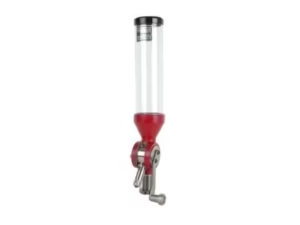
Now for powder charging, where precision matters most. According to Hornady data, a safe starting load with H4895 and the 75-grain ELD Match is 24.5 grains, with a maximum of 27.0 grains. Always start at the starting load – never begin at or near maximum. Set your powder measure or trickler to dispense 24.5 grains and verify every charge on your scale. Throw ten charges and weigh each one to confirm consistency. Single-stage presses make it easy to weigh every charge; progressive press users should still spot-check frequently.
Safe powder handling practices
- Work in a well-lit area free from distractions
- Keep only one powder container open at a time
- Verify powder type before and during your session
- Use a powder funnel to prevent spills
- Never attempt to “eyeball” powder charges
Set Your Bullet Depth for 75gr ELD Match
Bullet seating depth affects both pressure and accuracy. For this starter load, seat the 75-grain ELD Match to an overall cartridge length of 2.260 inches. This length feeds reliably from AR-15 magazines and keeps you safely away from the lands in most 22 ARC chambers. Measure from the base of the case to the tip of the bullet using your calipers, and check every fifth round to ensure consistency.
Adjust your seating die by screwing it down in small increments and testing with an empty, primed case and bullet. Once you’ve achieved the correct depth, lock your die and seat all bullets. The 22 ARC typically doesn’t require a crimp when using bullets with a good cannelure or crimp groove, but you can apply a very light crimp if your rifle is semi-automatic. Excessive crimp can deform the bullet and harm accuracy. After seating, inspect each round – the bullet should sit straight with no visible runout.
Quick takeaways
- Start with 24.5 grains of H4895 (never exceed published maximums)
- Seat 75gr ELD Match bullets to 2.260″ overall length
- Trim cases to 1.490″ for consistency
- Seat primers flush or 0.002-0.003″ below case head
- Weigh every powder charge on your first batch
- Inspect each completed round before heading to the range
Common Mistakes That Ruin Your First Batch
Skipping case length checks is a frequent error that leads to pressure problems. Even new brass can vary in length, and cases stretch after firing. Measure and trim every case to specification. Inconsistent case length creates erratic neck tension and can push bullets into the lands, spiking pressure dangerously. Invest the time to trim properly – it takes minutes and prevents major headaches.
Mixing up powder types or using old, unlabeled powder is a recipe for disaster. Keep your powder containers clearly labeled and store them properly. If you’re unsure what powder is in a container, dispose of it safely – don’t guess. Another common mistake is seating bullets too long for your magazine or chamber. The 22 ARC was designed around magazine-length loads, but individual chambers vary. Always test-fit your loaded rounds in your magazine and verify they chamber smoothly without resistance.
Additional pitfalls to avoid:
- Over-crimping bullets, which damages accuracy
- Failing to check primer seating depth
- Not recording your load data for future reference
- Rushing through the process and missing steps
- Using damaged or mixed headstamp brass
- Ignoring signs of excessive pressure at the range
FAQ: Your First 22 ARC Handload Questions
Can I substitute CCI 450 primers for CCI 41?
Yes, CCI 450 magnum small rifle primers work well in 22 ARC and are often easier to find. They provide slightly more ignition energy, which can be beneficial with ball powders. Start at the same starting load and watch for pressure signs. Some shooters report tighter groups with 450 primers in temperature extremes.
How many times can I reload 22 ARC brass?
Quality brass like Hornady should give you 5-8 reloadings with moderate loads before primer pockets loosen or case necks crack. Inspect cases after each firing for signs of head separation, especially the thin area just above the web. Discard any brass showing a bright ring or excessive stretching.
What’s the best way to store loaded ammunition?
Store your handloads in a cool, dry place away from temperature extremes and moisture. Use plastic ammo boxes with labels showing the load recipe, date, and any notes. Keep handloads separate from factory ammunition and clearly marked – never mix them in the same container.
Do I need special dies for 22 ARC?
Yes, you need 22 ARC-specific dies. The cartridge shares a case head with 6.5 Grendel but has different body taper and neck dimensions. Most major die manufacturers now offer 22 ARC die sets. A basic two-die set (full-length sizer and seating die) is sufficient for bolt guns; AR shooters may want a small base die for reliable feeding.
How will I know if I’m seeing pressure signs?
Watch for flattened primers, ejector marks on the case head, sticky bolt lift, or blown primers. At the range, start with your 24.5-grain loads and work up slowly if you want more velocity. Never jump more than 0.5 grains between test loads. If you see any pressure signs, stop immediately and reduce your charge.
Should I crimp my 22 ARC loads?
For bolt-action rifles, crimping is usually unnecessary and can harm accuracy. For semi-automatic AR-15 platforms, a very light crimp can prevent bullets from being pushed deeper into the case during feeding. If you crimp, use a separate crimping die and apply just enough to remove the case mouth flare – you shouldn’t see a visible crimp ring.
Your first batch of 22 ARC handloads doesn’t need to be complicated or experimental. By following this proven recipe with H4895 powder and 75-grain ELD Match bullets, you’ll produce safe, accurate ammunition while learning the fundamentals of the reloading process. Take your time with each step, especially case prep and powder charging, and don’t skip the final inspection before heading to the range.
Once you’ve shot this starting load and confirmed it functions reliably in your rifle, you can begin exploring slight variations in powder charge or seating depth to fine-tune accuracy. Keep detailed records of what works and what doesn’t – handloading is as much about data collection as it is about making ammunition. Start conservative, stay safe, and enjoy the satisfaction of shooting rounds you built yourself.