

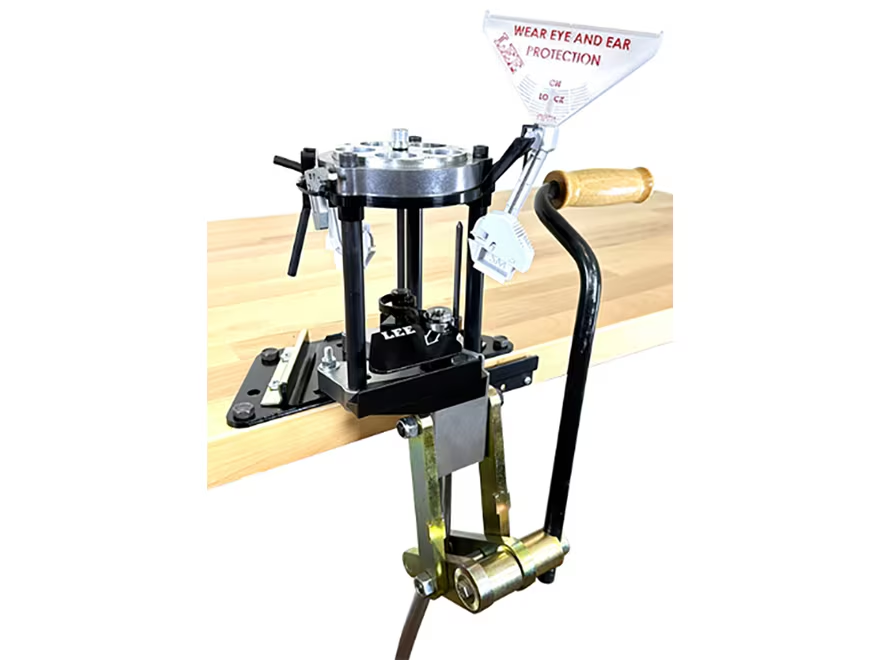
Overview – What It Is
The Lee Value Turret is a budget-friendly 4-hole turret press with auto-indexing capability, designed for efficient reloading of pistol and rifle cartridges. It bridges the gap between single-stage simplicity and progressive speed, allowing multiple operations without die changes. If you are starting out or need moderate volume without high cost, this press offers value with features like removable auto-index for versatility in tasks from decapping to bullet seating.
What’s in the Box
Typical contents (may vary by batch/region):
- Lee Value Turret press with 4-hole aluminum turret and auto-index rod.
- Operating handle with grip.
- Primer arm with large and small adapters.
- Spent-primer catcher tube.
- One extra turret (in some kits).
- Printed instructions and parts diagram.
Usually not included: shell holders, dies, powder measure, case lube.
Materials & Build
- Frame – lightweight cast aluminum with powder-coat finish for corrosion resistance.
- Ram – hardened steel for smooth cycling; drilled for primer disposal.
- Turret – aluminum with 4 stations; auto-index mechanism via square-threaded rod.
- Handle – steel linkage with comfortable grip; compound leverage for ease.
- Finish – durable powder coat to withstand reloading solvents and wear.
The cast aluminum construction keeps it light and affordable, suitable for bench use without excessive weight. While not as rigid as cast-iron models, it provides adequate strength for standard reloading, with some flex noted in heavy operations but reliable for consistent loads.
Key Specs & Compatibility
- Die threads: standard 7/8″-14 for common dies.
- Shell holders: accepts universal styles from Lee, RCBS, and more; ram slot for primer arm.
- Stroke / window: approximately 3.5 inches; handles cartridges up to .30-06, including 9mm, .45 ACP, .223 Rem, .308 Win.
- Spent-primer management: ram-through disposal with attached tube to catcher.
- Mounting: two-hole base; fits standard benches or quick-mount plates.
Warranty & Origin
Manufacturer: Lee Precision (USA). Components are primarily made in the U.S., with potential global sourcing for minor parts. Warranty is a limited two-year coverage against defects in materials and workmanship for normal use; verify current details with Lee or retailer using proof of purchase.
Where the Value Turret Excels – Use Cases
- Moderate-volume pistol – 9mm, .45 ACP, .38 Special: auto-index for 150-200 rounds per hour.
- Rifle batch loading – .223 Rem, .308 Win: efficient for hunting or target ammo with quick station swaps.
- Beginner setups – learn multiple steps; remove index rod for single-stage practice.
- Mixed caliber runs – extra turrets allow dedicated setups for different cartridges.
- Brass prep station – decapping and sizing in one pass for efficiency.
Setup & Mounting – Do It Once, Do It Right
- Bench: secure to a stable surface (e.g., 1.5″ thick wood) with bolts for minimal flex.
- Placement: edge-mount for handle clearance; align with sturdy support to avoid wobble.
- Index adjustment: install rod for auto-advance; remove for manual control.
- Primer system: attach catcher tube; choose large/small arm per primer size.
- Lubrication: light oil on ram and linkages; clean primer area to prevent jams.
- Die installation: thread into turret stations; set depths with lock rings and verify with calipers.
Real-World Notes
- Lightweight design aids portability, but mount securely to reduce flex during heavy resizing.
- Auto-index works smoothly for pistol; some users note minor play affecting precision rifle loads.
- Primer tube can clog; regular cleaning ensures reliable operation.
- Produces consistent ammo for plinking or hunting, with extreme spreads around 20 fps in tests.
- Budget build lasts for thousands of rounds with care, though not as durable as premium options.
Competitors – Quick Context
| Model | Advantages vs. Value Turret | Trade-offs vs. Value Turret |
|---|---|---|
| Lee Classic Turret | Cast-iron frame for better rigidity; handles larger calibers easily | Higher cost; heavier and less portable |
| RCBS Turret Press | 6 stations for more operations; smoother priming | More expensive; manual index only |
| Redding T-7 | Superior tolerances and 7 stations for match precision | Significantly pricier; overkill for casual use |
| Lyman All-American 8 | 8 stations and rock-solid build; economical premium alternative | Higher price; requires specific shell holders |
Pros & Cons
Pros
- Affordable entry to turret reloading.
- Auto-indexing boosts efficiency.
- Lightweight and compact for storage.
- Versatile for pistol and rifle.
- Removable index for single-stage use.
- Compatible with standard accessories.
Cons
- Aluminum frame may flex under heavy loads.
- Primer system prone to clogs.
- Some turret play affects precision.
- Limited to 4 stations for complex setups.
What to Buy with It (Day-One Kit)
- Caliber-specific shell holders.
- Die set with expander and seater.
- Powder measure (e.g., Lee Auto-Drum).
- Case lube and application pad.
- Digital calipers for measurements.
- Extra turrets for multiple calibers.
- Bench mount plate for easy removal.
FAQ
- Can it load rifle cartridges like .308 Win? – Yes, with adequate clearance for standard lengths.
- Is auto-indexing reliable for high volume? – Effective for moderate runs; practice ensures smooth cycles.
- How does it handle priming? – On-press system works, but some prefer separate tools for feel.
- Compatible with quick-change turrets? – Yes, extras swap easily for caliber changes.
- Better than single-stage for beginners? – Offers speed, but start slow to learn basics.
Who Should Buy It
- Beginners wanting efficiency beyond single-stage.
- Budget reloaders for pistol plinking or hunting ammo.
- Shooters loading 100-300 rounds per session.
- Those prioritizing value over premium build.
- Hobbyists with limited space or budget.
Bottom Line
The Lee Value Turret is an accessible turret press that delivers solid performance for the price, blending speed and simplicity for everyday reloading. From 9mm batches to .308 hunting loads, it handles essentials reliably, making it a practical choice for cost-conscious enthusiasts seeking more than basic single-stage output.
