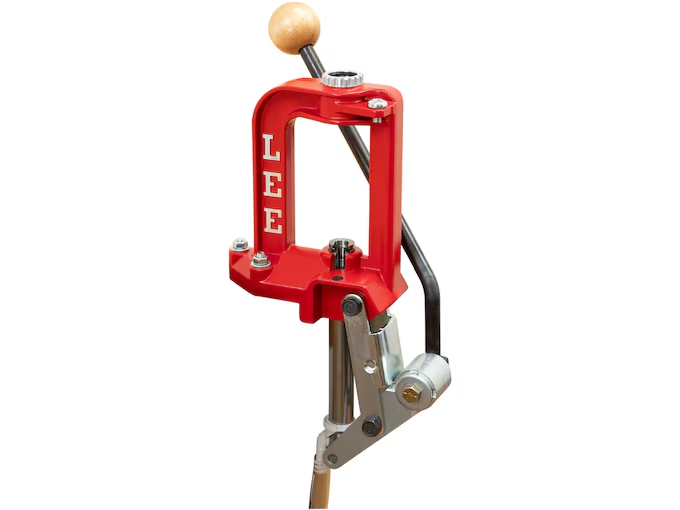
I’ve been reloading for years. Like a lot of you, I’ve got the whole lineup – progressive presses, turret setups, and some serious heavy hitters like the RCBS Summit and Redding T-7. My bench is full of gear I trust and use regularly. So when I picked up the Lee Challenger III, I didn’t do it because I needed another press – I got it because I wanted a dedicated tool for a very specific purpose: dirty work. Decapping, cast bullets, maybe the occasional subsonic load.
And you know what? It surprised me. In a good way.
Why I Bought It – And What I Paid
I found the Lee Challenger III on sale for $79.99 – regular price is around $99.99, so it was about 20% off at the time. For that kind of money, I figured it’d be a solid backup press, something I wouldn’t mind getting dirty or bolting to a small bench.
Turns out, it’s earned its place on my main bench. It’s not a toy – it’s a legit, useful piece of equipment when you use it for the right jobs.
What I Actually Use It For
Let me be clear – I don’t do case resizing on the Challenger III. That’s what my Summit and turret presses are for. I prefer more mass and stability for full-length sizing, especially for precision rifle rounds. But here’s what I do use it for – and why I think it’s worth every penny:
– Decapping
This is the job that got it through the door. I mounted a universal decapping die, set up a small bottle to catch spent primers, and now it’s my go-to for cleaning out primer pockets before I tumble cases.
- It’s fast
- It’s clean – no more primers all over the bench
- It’s always ready to go
When I’ve got 200–300 cases to decap, I just sit down, turn on some music, and get into a rhythm. No fiddling with my main press setups, no changing dies or settings – just straight work. That alone made the Challenger III worth owning.
– Bullet Seating for Subsonics
Here’s where the press really earned my respect. When I’m loading subs – especially big, heavy hitters like .45-70 or .30-06 subsonics – I need control and feel. Most of the time I’m working with soft cast bullets, and if you’re into that, you already know how easy it is to screw them up with too much force or poor alignment.
The Challenger III has just the right amount of “feedback.” I can feel when the bullet starts entering the case. I can sense when the seating depth is just right. No harsh mechanical slams, no over-travel. Just a smooth, consistent stroke that gives me full control.
– Low-Volume Revolver Loads
When I’m not working in bulk, and I just want to make a box of .38 Special or .357 Magnum, I grab the Challenger. I don’t need speed – I need consistency, and I want to enjoy the process.
I load sitting down, take my time, and enjoy the calm. It’s perfect for those small weekend projects or when I want to test a new bullet or powder combo without going full-setup on the turret or progressive.
Why It Stays On My Bench
The thing about the Challenger III is – it’s always ready. It doesn’t take up a ton of space, it’s lightweight, and it just works. I keep it bolted to a small portable board that I can move around the shop. It doesn’t ask for much, but gives back a lot.
- Great for quick tasks
- Perfect “secondary” press
- No need to mess with your main setup
It’s also easier to take on the road. I’ve taken it to a hunting cabin once or twice when I needed to decap or seat some light loads at camp. Try doing that with a Summit or a T7.
Would I Recommend It?
Absolutely – but with context. No, it’s not a press I’d size .338 Lapua on or do bulk reloading for competition. But for what it is – a reliable, honest, single-stage press – it’s one of the best values out there.
And if I were just starting out again? I wouldn’t hesitate to start with the Challenger III. It’s affordable, forgiving, and more capable than it looks.
My Final Thoughts
The Lee Challenger III surprised me. For a press that cost me less than $80, it’s become one of my most used tools – not because it’s flashy, but because it just works. It’s simple, smooth, and consistent. Perfect for decapping, cast bullet seating, and those quiet, focused moments at the bench that remind you why you started reloading in the first place.
Want a dependable backup press or a solid starter for someone new? This one’s hard to beat.